Seoul expresses worries over a second Yalta Conference as fears mount that North Korea's nuclear status could be discussed without South Korea's participation
Concerns are mounting in South Korea that an unprecedented summit this week between the leaders of the US, China and Russia could sideline Seoul in discussions over North Korea's nuclear program, potentially opening the door to negotiations that treat Pyongyang's nuclear arsenal as an arms control issue rather than one requiring complete denuclearization.
The prospect of the three major powers discussing the future of the Korean Peninsula without South Korea's participation has fueled warnings of a second Yalta Conference, with both government officials and opposition lawmakers expressing concern that Seoul's security interests could be compromised in broader geopolitical negotiations.
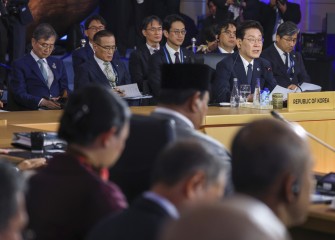
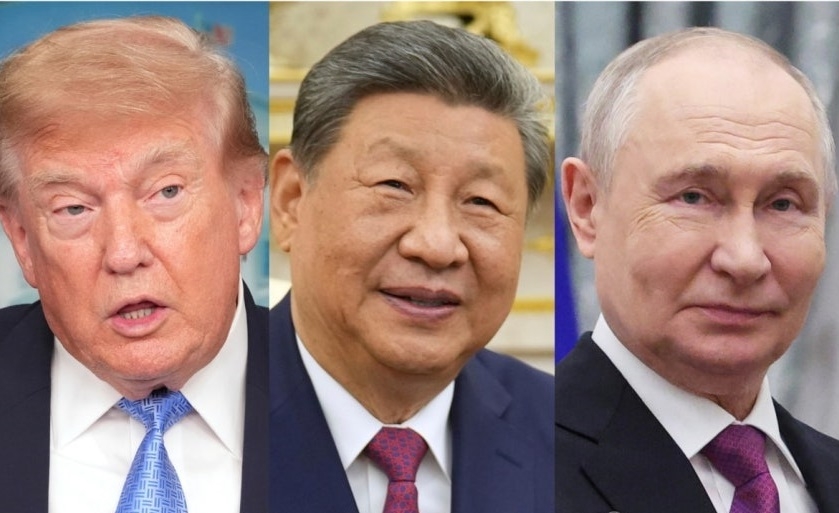
US President Donald Trump, Chinese President Xi Jinping and Russian President Vladimir Putin are scheduled to hold their first-ever trilateral summit Thursday in Shenzhen, China, on the sidelines of the Asia-Pacific Economic Cooperation leaders' meeting.
Although the summit is expected to focus on nuclear arms reductions and other major international security issues, North Korea's nuclear program could also emerge as a topic of discussion.
Seoul has been particularly wary in recent days that discussions among the three major powers could proceed without adequately reflecting South Korea's position or produce outcomes that undermine its long-standing commitment to North Korea's denuclearization.
"If a US-China-Russia summit takes place, it must not become a second Yalta Conference. We have made it clear not only to the United States but also to China that our national interests concerning Korean Peninsula issues must not be compromised," a senior Seoul Foreign Ministry official, requesting anonymity, told reporters in Beijing on Saturday.
The official also reportedly conveyed Seoul's opposition to any agreement that would effectively recognize North Korea as a nuclear-armed state or undermine South Korea's efforts to establish a lasting peace regime on the Korean Peninsula.
The reference to the Yalta Conference reflects concerns that the three major powers could make decisions affecting the peninsula without consulting South Korea.
At the February 1945 conference, the leaders of the United States, Britain and the Soviet Union discussed the post-World War II international order, including arrangements affecting Korea's future, without Korean representation.
The concerns have been echoed by five-term Rep. Na Kyung-won of the main opposition People Power Party, who warned Monday that South Korea risks being excluded from negotiations that could fundamentally reshape the security landscape on the peninsula.
"A second Yalta Conference, in which our very survival becomes a bargaining chip among major powers, is becoming a reality," Na wrote on social media.
She argued that North Korea's nuclear arsenal could be treated as a subject of arms reduction rather than dismantlement if Washington pursued a broader deal with Beijing and Moscow without adequately consulting Seoul.
Na also criticized the Lee Jae Myung administration for what she described as deteriorating trust in the South Korea-US alliance, warning of a humiliating case of "Korea passing" — a term used to describe Seoul being sidelined, or passed over, in diplomatic decisions affecting its national interests.
She urged Lee to use his upcoming diplomatic engagements to secure an explicit reaffirmation from Trump of Washington's commitment to North Korea's complete denuclearization.
The government has also acknowledged the possibility that Korean Peninsula issues could be discussed at the trilateral summit.
First Vice Foreign Minister Park Yoon-joo told lawmakers during a National Assembly Foreign Affairs and Unification Committee meeting last week that Seoul was monitoring the situation.
"We are closely monitoring developments involving the United States, China and Russia," Park said, adding that the government "cannot rule out the possibility that Korean Peninsula issues could also be discussed."
The warnings come as Pyongyang has stepped up high-level exchanges with Beijing and Moscow ahead of the summit, raising speculation that North Korea may be seeking to coordinate its position with its two major partners before potential discussions on the peninsula.
Jo Yong-won, a secretary of the Central Committee of North Korea's ruling Workers' Party and one of leader Kim Jong-un's closest aides, arrived in Moscow on Saturday, leading a party and government delegation at the invitation of Dmitry Medvedev, chairman of Russia's ruling United Russia party.
His visit followed a trip to China from Nov. 3 to 7 by Kim Song-nam, a senior Workers' Party official overseeing international affairs who held talks with several high-ranking Chinese officials, including Foreign Minister Wang Yi, senior Communist Party official Cai Qi, and Liu Haixing, head of the party's International Department.
South Korea's Unification Ministry said Monday it was closely monitoring the timing and possible implications of the exchanges.
"Although the purpose and schedule of this visit have not been disclosed, it is a high-level exchange between North Korea and Russia taking place immediately ahead of the US-China-Russia summit scheduled for this week," Unification Ministry spokesperson Yoon Min-ho said during a regular press briefing in Seoul.
Yoon added that the ministry was paying particular attention to Jo's role in leading a delegation representing both the party and government, following Kim Song-nam's earlier visit to Beijing.
Lim Eul-chul, a professor at Kyungnam University's Institute for Far Eastern Studies, suggested that Jo's visit to Russia could be part of an effort to gauge Washington's diplomatic intentions.
"The visit appears to be part of an indirect strategic communication process aimed at assessing Trump's approach toward Russia and North Korea, as well as Putin's negotiating strategy, ahead of the US-China-Russia summit," Lim said.
Trump has repeatedly expressed a willingness to resume dialogue with Kim Jong-un, raising the possibility that the trilateral summit could provide fresh diplomatic momentum for engagement between Washington and Pyongyang.
mkjung@heraldcorp.com